Concrete & Flatwork Discovery Guide
Thickness, base prep, reinforcement, control joints, and drainage — what to ask about before anyone pours, and why the cheap bid is usually thinner.
Concrete & Flatwork
The cracked driveway you're replacing probably didn't fail because of the concrete — it failed because of what was under it and where the water went.
Flatwork lives or dies on what's underneath it and how water leaves the site. We gather the measurements, drainage, and access details up front so your quote reflects the real job.
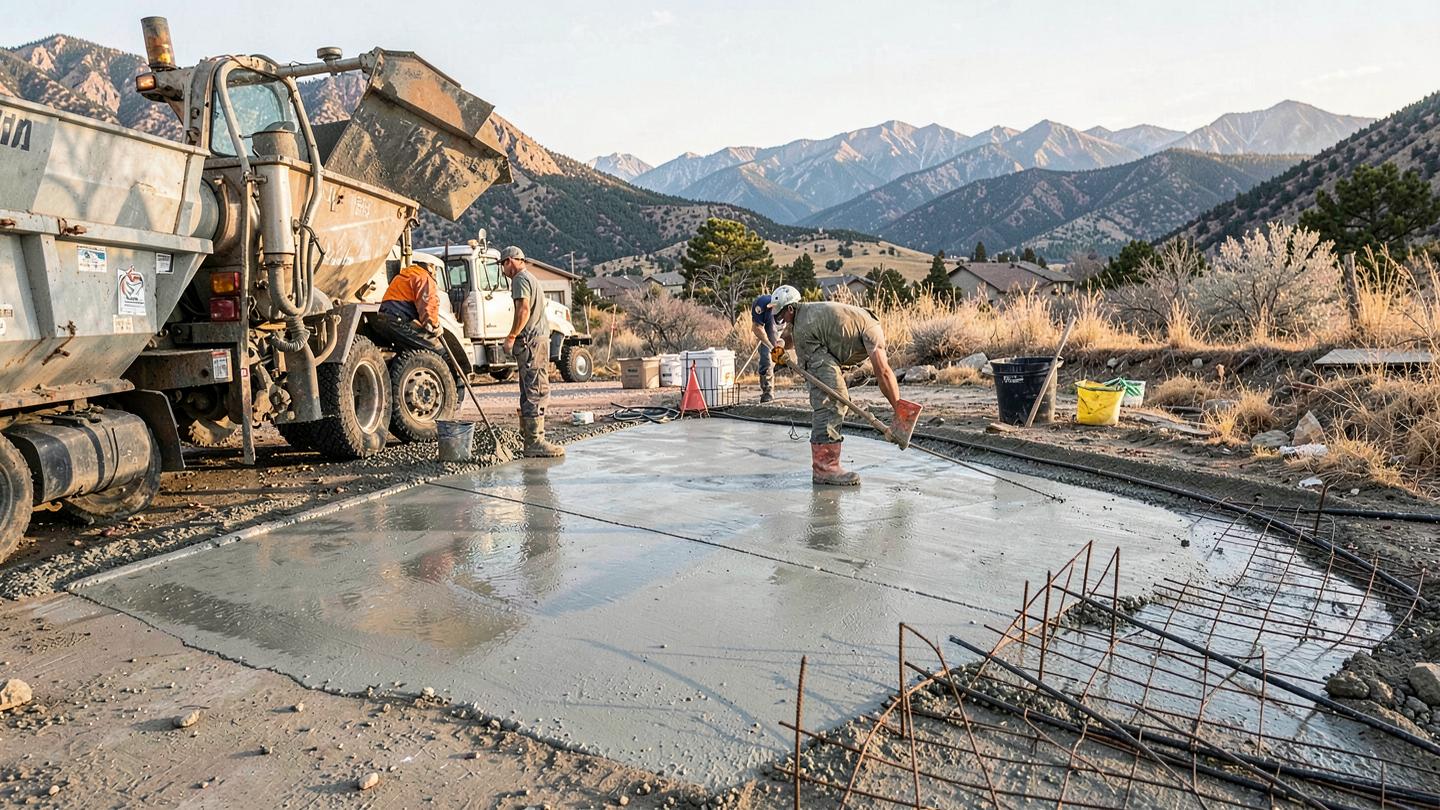
Base and drainage outlive the mix. Front Range soils swell and shrink with moisture, and a slab poured on unprepared ground moves with them. Compacted base, the right thickness for what will park on it, control joints cut on time, and water routed away from the house are what make flatwork last twenty years instead of five.
Expect hairline cracking somewhere — concrete does that. What you should not accept is heaving, settling, or a slab that pitches water back at your foundation. Any honest quote should say what base is going in and how deep the pour is.
Good answers here are what let a licensed pro give you a real number instead of a guess.
Site conditions drive concrete pricing more than anything else. Photos of the whole area from a few angles — plus one showing where a truck could park — usually move a job from a rough range to a real number.
Give us the size, the site, and the access. That's most of the scope right there.
Plain-English guides we wrote from real jobs. No cost, no sales call required.
Thickness, base prep, reinforcement, control joints, and drainage — what to ask about before anyone pours, and why the cheap bid is usually thinner.