HVAC Discovery Guide
How equipment is actually sized for a Colorado home: square footage, ductwork condition, insulation, altitude, and the details that separate a real quote from a guess.
Heating & Cooling
Nobody replaces a furnace in October by choice — it's replaced in January, at the worst price, because nobody looked at it in October.
Cold rooms, a furnace that won't hold, or an aging system you'd rather replace on your schedule than in January. We capture the details, then match you with a licensed HVAC pro from our network.
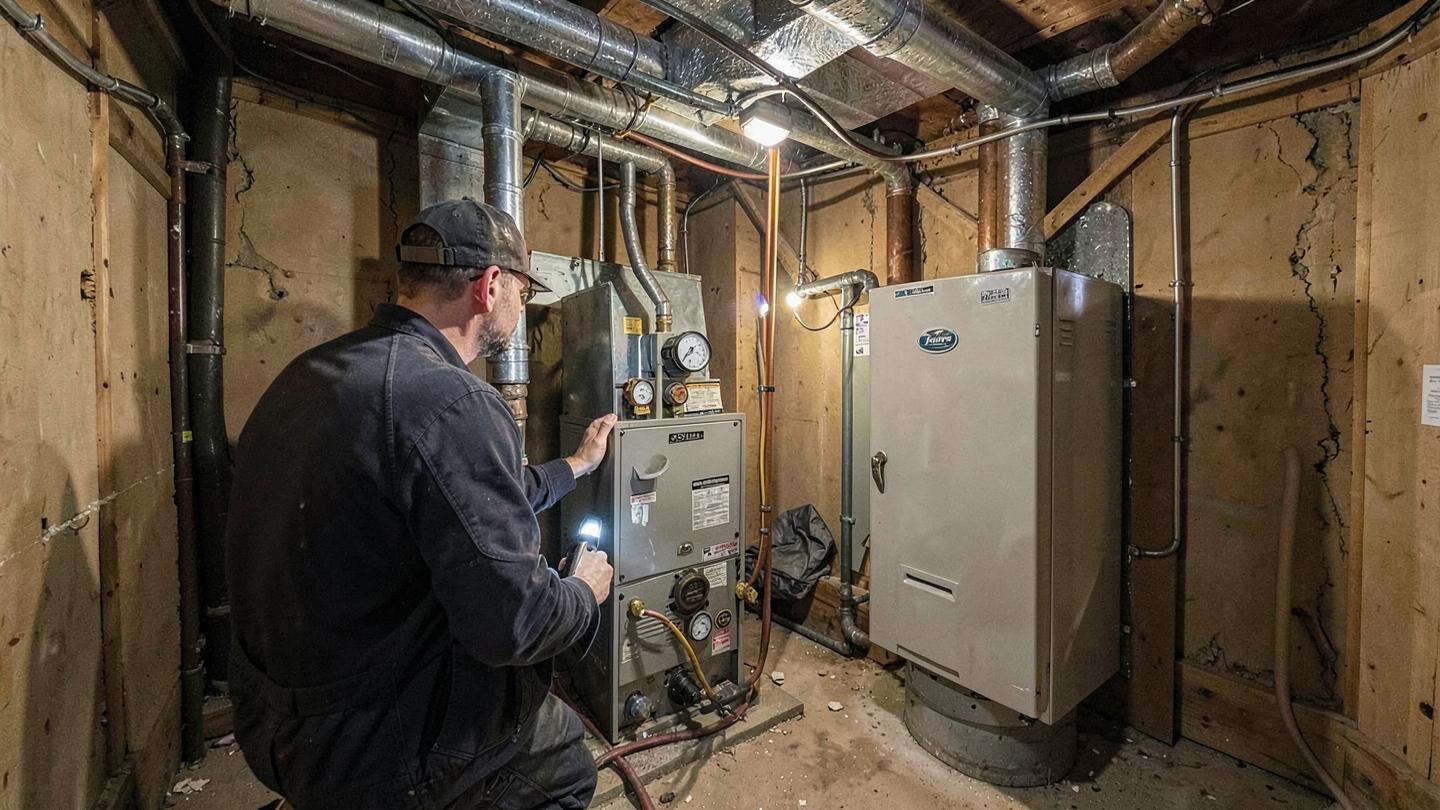
One cold room is usually not a furnace problem. At 6,000 feet with a two-story house, an upstairs that never warms up is far more often duct sizing, a closed damper, or return air that has nowhere to go. Replacing the equipment without fixing airflow buys you an expensive furnace and the same cold room.
The second thing worth knowing: equipment here is sized for altitude. Gas appliances lose capacity as elevation rises, and a unit sized off a sea-level chart runs wrong from day one. That is why we ask for square footage, levels, and a photo of the data plate before anyone quotes a replacement.
Good answers here are what let a licensed pro give you a real number instead of a guess.
If you have no heat and it's cold out, call 719-500-1081 rather than waiting on a form. We'll tell you honestly what we can line up and when.
Describe what your system is doing. The more detail, the better the quote pathway.
Plain-English guides we wrote from real jobs. No cost, no sales call required.
How equipment is actually sized for a Colorado home: square footage, ductwork condition, insulation, altitude, and the details that separate a real quote from a guess.